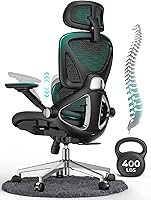
What Does BIFMA Certified Mean?
What does BIFMA stand for? BIFMA stands for the Business and Institutional Furniture Manufacturers Association; for a chair certification claim, check the standard, exact model, and who verified compliance.
On this page (8 sections)
- What does BIFMA stand for in office furniture?
- What does BIFMA certification cover on an office chair?
- How can you check a BIFMA claim before buying?
- Which BIFMA office chairs suit different buyers?
- How do you choose a chair that fits your body and desk?
- How should you assemble and care for a BIFMA chair?
- What common mistakes weaken a chair purchase?
- What does BIFMA stand for when making your final choice?
BIFMA stands for the Business and Institutional Furniture Manufacturers Association. For an office chair, a BIFMA claim is useful when you can identify the standard, exact model, and scope of verification.
Use that information to judge the durability and safety claim, then check fit separately. A chair can meet a furniture standard and still have a seat that's too high or too deep for you.
What does BIFMA stand for in office furniture?
BIFMA is a trade association for commercial furniture makers that develops voluntary furniture standards. Those standards address areas such as strength, stability, durability, and safety.
The association's name and a chair's certification are different things. A BIFMA reference on its own doesn't identify who evaluated the chair, which requirements applied, or what evidence supports the claim.
For office seating, one standard you'll encounter is ANSI/BIFMA X5.1, which covers general-purpose office chairs. BIFMA's standards overview helps you identify standards by furniture type.
What does BIFMA stand for on a chair label?
The acronym names the association, even when it appears beside a certification claim. Read the surrounding wording to learn what the brand is claiming about that chair.
“BIFMA compliant” states that a product meets requirements; “certified” should point to a defined verification process. Neither phrase replaces a model-specific document that identifies the standard and scope.
What does BIFMA certification cover on an office chair?
Coverage depends on the named standard and the certificate's scope. Chair standards provide defined methods for evaluating performance under specified conditions.
Areas can include stability, structural strength, and durability under repeated loading. The exact requirements depend on the standard and edition, so avoid treating every BIFMA reference as equivalent.
A gas cylinder certificate concerns a component. It doesn't establish that the complete chair, including its base, back, and arms, has the same certification.
Certification also doesn't establish personal comfort or promise a fixed lifespan. Assembly, daily use, maintenance, and replacement parts still matter.
How can you check a BIFMA claim before buying?
Look for evidence connecting the exact chair model to a named standard. A logo or broad claim gives you less useful information than documentation with a clear scope.
Use this checklist before narrowing your choice:
- Identify the full standard number and edition.
- Match the model number to the chair you're ordering.
- Find the named certification body when certification is claimed.
- Check whether the scope covers the whole chair or one component.
- Confirm weight capacity and intended use separately.
Save any supporting document with your order details. For shared offices, keep the assembly instructions and support contact somewhere the next person can find them.
An unclear claim is a reason to ask for clarification before buying. It isn't a reason to assume the chair has passed every requirement you care about.
Does BIFMA certification guarantee a long-lasting chair?
Certification doesn't guarantee a set number of years of service. A chair's useful life also depends on its construction, workload, care, and whether worn parts can be replaced.
Check what the warranty covers and whether the brand supplies replacement cylinders, casters, or other parts. Our guide to how long office chairs last explains the wear signs that matter.
Which BIFMA office chairs suit different buyers?
Choose among these chairs by seat fit and adjustment needs after checking their certification claims. Their different seat designs make them useful comparisons rather than interchangeable choices.
MOLENTS: for buyers who want more lumbar adjustment
The MOLENTS chair suits someone who wants to change both the height and depth of lower-back support. Its lumbar pad moves up and down, forward and backward, while 3D armrests provide more ways to position your arms.
MOLENTS claims BIFMA X5.1 certification for this chair. The back has 3 reclining positions from 90° to 120°, useful if you switch between upright desk work and a more relaxed seated position.
The seat measures 19.8 inches wide and 18.9 inches deep, with a height range of 19.5 to 23.3 inches. Skip it if the minimum height leaves your feet hanging or the seat edge presses behind your knees.
Also consider the moving arm panels: they slide and rotate. Buyers who prefer fixed panels should ask MOLENTS about its fixed-panel option before ordering.
ELABEST: for buyers who prefer a mesh seat
The ELABEST chair suits buyers who prefer mesh beneath their legs and want adjustable recline resistance. Its synchro-tilt mechanism has 3 lockable positions and adjustable tension, alongside lumbar support and 3D armrests.
ELABEST claims BIFMA 5.1 certification. Confirm the full standard and covered model through supporting documentation when certification is central to your choice.
Its seat is 20 inches wide and 17.7 inches deep, with a height range of 19.6 to 23.6 inches. The shallower seat is worth comparing with MOLENTS if you need less front-to-back depth, but its minimum height still needs careful checking.
Skip it if you want a foam seat or need a lower sitting position without arranging a different gas lift. ELABEST offers help with alternate lift heights; confirm the resulting dimensions before relying on that option.
TRALT: for buyers who want a lower foam seat
The TRALT chair suits buyers who prefer molded foam beneath them and mesh behind their back. It also has depth-adjustable lumbar support.
Its seat measures 19.7 inches wide and 17.3 inches deep, with a height range of 17.7 to 21.7 inches. That lower starting height makes it worth comparing first if the other 2 chairs sit too high for your legs.
TRALT specifies a 330 lb capacity and describes its Class 3 gas lift as BIFMA certified. It also makes a broader basic durability and safety certification claim, so confirm the standard and whole-chair scope.
Skip it if you need a seat deeper than 17.3 inches or if 330 lb doesn't cover your needs. If adjustable armrests are essential, confirm their presence and movement before choosing this model.
Treat capacity as a separate buying check for every chair. Our guide to office chair weight capacity explains how to use that number.
How do you choose a chair that fits your body and desk?
Start with seat height and depth, then check arm placement and back support. Certification can't resolve a mismatch between your body and the chair's adjustment range.
With your back supported, your feet should rest on the floor or a stable footrest. Leave some clearance behind your knees rather than letting the seat edge press into them.
Measure a chair you already find comfortable, including its compressed seat height. Compare those measurements with our guide to office chair seat height and depth before ordering.
Armrests should let your shoulders relax while your elbows stay near your sides. Check desk clearance too, since arms that hit the desktop can keep you too far from the keyboard.
For a complete sequence, read how to choose a home office chair. If these 3 options miss your fit needs, compare the alternatives in our best ergonomic office chair guide.
How should you assemble and care for a BIFMA chair?
Follow the chair's instructions and check the completed assembly before regular use. A certification claim doesn't compensate for missing hardware, loose fasteners, or incorrect assembly.
Lay out the parts, match the hardware, and start threaded fasteners by hand to avoid cross-threading. Follow the manual's tightening order and use its supplied hardware.
For MOLENTS, check inside the seat packaging for the base leg before reporting it missing. Our guide to how to assemble an office chair covers the general assembly sequence.
Set height first, then lumbar support, armrests, and recline tension. Change one setting at a time so you can tell which adjustment improves your position.
Remove dust and crumbs from mesh and moving areas, following the brand's cleaning instructions. Avoid soaking the seat or applying lubricant to mechanisms without guidance.
Inspect loose fasteners, damaged casters, or unexpected sinking promptly. Stop using a chair with a cracked base or another damaged structural part until the problem is resolved.
What common mistakes weaken a chair purchase?
The biggest mistake is letting a certification badge replace basic fit and use checks. A clear standard matters, but so do seat dimensions and a usable return policy.
Don't assume “commercial” means suitable for every body size or round-the-clock use. Match the chair's stated limits to the person and workload.
Don't choose a deep seat just because it looks spacious. If it prevents you from reaching the backrest comfortably, the extra depth works against you.
Avoid forcing the lumbar pad firmly into your back or locking yourself into one posture all day. Use comfortable adjustments, change position, and take regular movement breaks.
What does BIFMA stand for when making your final choice?
BIFMA stands for the Business and Institutional Furniture Manufacturers Association, but your buying decision needs both credible certification evidence and suitable dimensions. Require a clear model and scope when certification is a deciding factor.
Choose MOLENTS for lumbar adjustment in 2 directions, ELABEST for a mesh seat with adjustable tilt tension, or TRALT for a foam seat with a lower starting height. Skip any option that misses your fit or capacity needs.
Once the chair arrives, use our guide to how to adjust an office chair to set it up around your desk.
Frequently asked questions
What does BIFMA stand for?
BIFMA stands for the Business and Institutional Furniture Manufacturers Association, a trade association for commercial furniture makers; it develops furniture safety and performance standards. When comparing chairs, check the named standard, the exact model covered, and whether the claim concerns the complete chair or a single component.
Does BIFMA certification mean an office chair is safe?
Certification against a named BIFMA standard can show that a chair met defined safety and performance requirements within a stated scope; it doesn't guarantee safety in every situation. Check the covered model, weight capacity, intended use, and assembly instructions, then choose dimensions that suit your body and desk.
Is BIFMA the same as ANSI/BIFMA?
BIFMA is the industry association, while ANSI/BIFMA identifies a BIFMA standard approved as an American National Standard; for general-purpose office chairs, you may see ANSI/BIFMA X5.1. The full standard number and edition matter because different standards address different furniture types, uses, and performance requirements.
Does a BIFMA chair certificate cover every part?
A certificate covers the model and scope it identifies, so a certificate for a gas cylinder doesn't establish whole-chair certification. Match the model name and standard number to the chair you plan to buy; ask the manufacturer to explain any limits or unclear wording before relying on the claim.