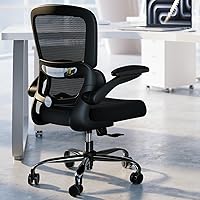
SIHOO M18 vs M57: Which Is Better? (October 2026)
In the SIHOO M18 vs M57 choice, pick the M18 for straightforward desk work when its height guidance fits you. Choose the M57 for more armrest adjustment and lumbar depth control, especially if you switch between typing and leaning back.
On this page (10 sections)
- SIHOO M18 vs M57: which should you choose?
- Who should buy the M18, and who should skip it?
- Who should buy the M57, and who should skip it?
- How do you check seat fit and desk clearance?
- Which adjustments matter during a full workday?
- Do capacity and construction favor either chair?
- How should you assemble and set up either chair?
- How do you care for the mesh, cushion and moving parts?
- Which buying mistakes should you avoid?
- Which SIHOO chair should you choose for your desk?
Choose the M18 for straightforward desk work if its recommended height range suits you; choose the M57 for more control over arm and lower-back support. The SIHOO M18 vs M57 decision starts with seat fit, then turns on which adjustments help you work comfortably.
Both have mesh backs, adjustable headrests and lumbar support. Neither should win your order simply because it has more controls or a slightly higher score.

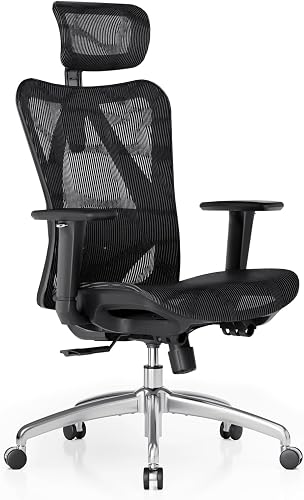
SIHOO M18 vs M57: which should you choose?
The M18 suits buyers whose desk setup needs core adjustments, while the M57 suits buyers who need more precise support placement. Start with your body proportions and work habits, then decide whether the extra movement solves a real problem.
SIHOO M18 vs M57 at a glance
| Feature | SIHOO M18 | SIHOO M57 |
|---|---|---|
| Recommended user height | 5 ft 6 in to 6 ft 2 in | Confirm fit through seat and support measurements |
| Headrest | Adjustable | Tilts and lifts |
| Lumbar support | Adjustable | Adjusts in height and depth |
| Armrests | 2D | 3D |
| Recline | Tilt, tilt lock and adjustable recline | 90° to 126° |
| Backrest width | 20.47 in | 20.07 in |
| Weight capacity | 150 kg, about 331 lb | 330 lb |
| Chair weight | 14.3 kg | 16.5 kg |
The M18 is the more straightforward choice when your arms already sit comfortably beside your keyboard and mouse. Its height guidance gives you a useful starting point, though it doesn't replace checking the seat.
The M57 earns its place when you struggle to position arm pads or need to change how far lumbar support presses forward. Those controls matter more than a small difference in backrest width.
Before choosing either, identify the problem with your current chair. Unsupported feet, pressure behind the knees and a distant keyboard call for different fixes.
Who should buy the M18, and who should skip it?
Buy the M18 if its height guidance matches you and its core adjustments meet your needs. Skip it if you need a specific recline range or arm positioning that its controls cannot provide.
The M18 suits a consistent desk routine
The M18 makes sense for someone who mainly types, uses a mouse and takes occasional seated breaks. You can focus on getting the seat, lower-back support and headrest into useful positions without making extra armrest movement the main buying reason.
It also suits buyers who want a mesh back with sponge fill in the chair. Seat feel is personal, so judge pressure and support during normal work rather than assuming the material will suit everyone.
Skip the M18 when fit is uncertain
If you're outside SIHOO's recommended height range, don't assume the chair will work because it has an adjustable headrest. A headrest cannot correct a seat that is too deep or a seat height that leaves your feet hanging.
Pass on the M18 if your purchase depends on a precise recline angle until you confirm that detail. It offers tilt and recline, but that doesn't establish the same movement range as the M57.
Our SIHOO M18 ergonomic chair review gives you a closer look if this is the stronger match for your desk.
Who should buy the M57, and who should skip it?
Buy the M57 when arm placement or lumbar depth is a clear priority. Skip it if you only want more adjustment options on paper or cannot confirm that the seat fits.
The M57 suits work that changes position
The M57 is worth considering if your forearm position changes between typing, mouse work and leaning back. Its extra armrest adjustment dimension gives you another way to position support, provided the actual movement matches your needs.
Don't assume “3D” tells you the direction or travel of every control. Confirm the armrest movements and adjustment range before ordering if one specific motion is essential.
The separate lumbar controls also suit someone who needs support at a particular height without excessive forward pressure. Moving a support up or down and changing its depth solve different fit problems.
Skip the M57 when the extra controls don't help
If your arms rest comfortably and you don't need lumbar depth control, the M57's main advantages may add little to your workday. More controls also require you to spend time finding useful settings.
A shared chair is another case to consider carefully. Extra adjustment can help different users, but each person needs to reset it rather than accept the previous user's position.
How do you check seat fit and desk clearance?
Check foot contact, thigh support and desk access before headrest comfort. A chair that fails these basics remains a poor match even when its backrest feels supportive.
Start with the chair you already use
Measure the floor-to-seat height that lets your feet rest flat while your thighs sit comfortably. Then measure usable seat depth and note whether the front edge presses behind your knees.
Leave a small gap behind the knees while your back rests against the backrest. If you must perch forward to avoid pressure, the seat may be too deep for you.
Compare usable width between the arms as well as the seat itself. Our guide to office chair seat height and seat depth explains how these measurements work together.
Measure the desk where you actually sit
Measure the lowest point under your desk, including drawers, rails and a keyboard tray. Armrests must clear that space if you want to roll close enough to work without reaching.
Check the desk opening's width too. A chair can fit beneath the desktop yet catch its arms against the sides when you turn or pull in.
If you raise the seat to reach a high desk, a footrest may be needed to keep your feet supported. Don't solve desk height by leaving your legs dangling.
Seat dimensions and adjustment ranges matter more than the small backrest width difference here. If neither chair meets your measurements, broaden the search with our best ergonomic office chairs for a home office.
Which adjustments matter during a full workday?
The most useful controls are the ones that let you keep work within reach without holding your body in place. Set the chair for your main task first, then adjust for breaks.
Arm support should let your shoulders relax
Position the pads so they support your forearms without pushing your shoulders upward. If the arms force your elbows away from your body, extra padding won't solve the mismatch.
You should still be able to move between keyboard and mouse freely. Armrests that stop the chair from approaching the desk can cause more reaching than they prevent.
The M57's extra adjustment dimension is useful if it solves that placement problem. The M18 remains a sensible choice when its arm positions already suit you.
Lumbar support should meet your lower back
Set lower-back support where it meets your natural inward curve while you sit against the backrest. Start with gentle contact rather than strong pressure.
On the M57, adjust height first and depth second so you can tell what each change does. Avoid using deeper support to compensate for sitting too far forward.
Recline is for changing posture
Use a more upright position for tasks that require close keyboard work, then lean back when the task allows it. Reclining while reaching forward can pull you away from the support you just adjusted.
A headrest should support a natural position when you lean back, rather than push your head toward the screen. Move it out of the way if it interferes with upright work.
For a step-by-step setup order, use our guide on how to adjust an office chair.
Do capacity and construction favor either chair?
Neither chair has a meaningful user capacity advantage, and construction materials alone don't establish a lifespan. Choose by fit within the stated limit rather than by tiny differences in converted units.
A wide backrest doesn't guarantee a wide seat, and a capacity figure doesn't tell you how much room exists between the arms. Larger users should check all 3 before choosing.
Don't treat any component strength figure as permission to exceed the user limit. Our office chair weight capacity guide explains what that number means for buying.
The M18 has a stainless steel frame, while the M57 has a reinforced aluminum base and dual-frame backrest. Neither material description proves that one complete chair will outlast the other.
The M57 is heavier, which matters if you need to carry it upstairs or move it between rooms. Plan a clear route and get help lifting awkward chair sections when needed.
SIHOO says the M57's casters roll quietly without scratching floors. Check for trapped grit and use floor protection suited to your surface rather than relying on that promise alone.
How should you assemble and set up either chair?
Follow the supplied assembly instructions, then adjust the chair at your desk before deciding how it feels. The M18 uses an 8-step assembly process; the M57 also requires assembly.
Build carefully before judging comfort
Lay out the parts and identify each fastener before starting. Keep screws loosely seated until the instructions call for tightening so the mounting holes can align.
Follow the stated tightening order and tool guidance. If a part doesn't line up, stop and check its orientation rather than forcing the screw.
Keep packaging and spare hardware organized until you've checked the chair. Our guide on how to assemble an office chair covers common assembly mistakes.
Adjust from the floor upward
Set seat height first, then check thigh support, lumbar contact and arm position. Leave the headrest until last because it should follow your seated posture.
Make one change at a time and use the chair for a normal task before changing something else. Adjusting every control together makes it hard to identify what helped.
Try the recline with space behind you and learn the controls before leaning fully back. A chair needs clearance from walls, cabinets and nearby furniture throughout its movement.
How do you care for the mesh, cushion and moving parts?
Keep dust, spills and loose fasteners under control using the chair's care instructions. Routine attention protects the surfaces and makes developing problems easier to spot.
Use a soft brush or suitable vacuum attachment to remove dust gently from the mesh and seams. Avoid catching the mesh with sharp tools or pressing hard with a narrow nozzle.
Blot spills promptly and follow SIHOO's cleaning guidance for the affected material. Let damp surfaces dry fully before sitting, and avoid soaking the cushion or mesh.
Remove hair and grit from the casters when rolling becomes rough. Check fasteners at the intervals in the instructions, especially if the chair develops movement where parts join.
Don't spray lubricant across the chair in response to a new noise. Our guide to why an office chair is squeaky helps you locate likely causes first.
SIHOO offers a 3-year warranty for both models. Its M18 promise includes free replacement parts and 30-day returns or refunds for faults or quality issues; its M57 promise includes 30-day returns and free replacement parts if needed.
Which buying mistakes should you avoid?
Avoid choosing by feature count, capacity alone or a few minutes of sitting. Check the chair during the work you actually do, while keeping any return conditions in mind.
- Buying for height alone: Your leg and torso proportions determine where the seat and supports need to sit.
- Ignoring desk clearance: Armrests that catch under a drawer can keep you too far from the keyboard.
- Overtightening lumbar support: Firm pressure isn't a substitute for correct support placement.
- Expecting recline to replace breaks: Change position and get up regularly instead of trying to find one permanent posture.
- Confusing back airflow with whole-chair cooling: A mesh back describes one contact area, not how every surface will feel.
During your first normal work sessions, watch for pressure behind the knees, raised shoulders or a need to slide forward. Persistent fit problems are a reason to reconsider the chair, not keep adding adjustments.
Which SIHOO chair should you choose for your desk?
For the SIHOO M18 vs M57 decision, choose the chair that passes your seat and desk checks first. If both pass, buy the M18 for a consistent desk routine or the M57 when arm positioning and lumbar depth control solve a specific need.
Skip both if you can't get supported feet, comfortable thigh contact and close access to your keyboard. No headrest or recline feature makes up for those missing basics.
Before ordering, write down your required seat height, usable depth and under-desk clearance. Keep our office chair seat height and seat depth guide beside those measurements so your final choice rests on fit.
Frequently asked questions
What is the difference between the SIHOO M18 and M57?
The main difference is adjustment: the M18 has 2D armrests, while the M57 has 3D armrests and lumbar support that moves in height and depth; the M18 also has a recommended user height range. Choose by seat fit first, then by the controls that help your desk work.
Does the SIHOO M18 or M57 have more adjustable armrests?
The M57 has more armrest adjustment dimensions, with 3D armrests compared with the M18's 2D arms; more movement is useful only if it puts the pads under your forearms without raising your shoulders or blocking the desk. Confirm the movement directions and range before relying on this difference.
Which SIHOO chair has a stated height range?
SIHOO recommends the M18 for people 5 ft 6 in to 6 ft 2 in tall; treat that as an initial fit filter, then check thigh support, foot contact and headrest placement. People of the same height can have different leg and torso lengths, so height alone cannot settle the choice.
What is the M57's recline range?
The M57 reclines from 90° to 126°; that range is useful for comparing upright desk work with a leaned-back break, but your desk position still matters. Keep the keyboard within easy reach while working, and check clearance behind the chair before using its full recline.
Which chair is better for a heavier user?
Neither has a meaningful capacity advantage: the M18 supports 150 kg, about 331 lb, and the M57 supports 330 lb; choose within the stated limit and check usable seat width, depth and arm spacing. If either chair is too narrow or shallow, extra adjustments won't make it suitable.