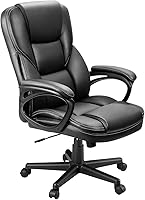
TRALT Chair Review: Worth It? (October 2026)
Our TRALT chair review recommends it for desk workers whose measurements suit its seat and who want adjustable lumbar depth. Choose Marsail instead if precise arm positioning and a defined recline range are priorities.
On this page (8 sections)
- TRALT chair review: who should buy it?
- Do the TRALT chair's dimensions fit you?
- How should you adjust the TRALT at your desk?
- Which alternative should you choose over TRALT?
- What should you check during assembly?
- How do you care for the mesh and foam seat?
- Which buying and use mistakes should you avoid?
- TRALT chair review: which chair should you buy?
The TRALT chair review verdict is straightforward: choose it for desk work if its seat fits your body and you want to adjust how firmly the lumbar support meets your back. Choose Marsail if arm positioning and recline controls are your main priorities.
TRALT combines a mesh back, a molded foam seat and flip-up arms. Those features make sense for a home office, but the deciding factors are your leg length, sitting width and desk clearance.
This review explains where TRALT fits, which alternative solves a different need, and how to set up the chair without letting useful adjustments work against you.
TRALT chair review: who should buy it?
The TRALT Ergonomic Desk Chair suits buyers who want lower-back contact they can adjust and a mesh back for airflow. Its published seat measurements make it easier to check fit before ordering.
TRALT Ergonomic Desk Chair

- Depth-adjustable lumbar support
- Mesh backrest
- Molded foam seat
- Flip-up armrests
A good fit for desk workers who want to fine-tune lower-back contact and move the arms out of the way. Check seat depth and minimum height before choosing it.
Pros
- Lumbar depth adjustment
- Breathable mesh back
- Adjustable headrest
- Flip-up armrests
Cons
- Recline range needs confirmation
- Seat measurements need a careful fit check
Its strongest reason to buy is lumbar depth adjustment. If a fixed support feels too prominent or barely touches your back, changing that contact can be more useful than adding another cushion.
The high-resilience molded foam seat is another reason to consider it. TRALT says the foam resists flattening, but long-term cushioning will also depend on use, loading and care.
The adjustable headrest gives you another contact point when leaning back. For upright typing, set it so it doesn't push your head toward the screen.
Who should skip the TRALT chair after this review?
Skip TRALT if its minimum seat height leaves your feet hanging, or if the seat edge presses behind your knees while your back rests against the backrest. Lumbar adjustment cannot make an unsuitable seat size fit.
Also choose another model if you need a particular recline angle or detailed arm-pad positioning. Confirm TRALT's recline range before ordering if leaning back is central to how you'll use it.
A flip-up arm clears space, but it doesn't serve the same purpose as an arm pad that moves toward your keyboard position. That distinction is the main reason to compare Marsail closely.
Do the TRALT chair's dimensions fit you?
The key measurements are a 19.7 in seat width, 17.3 in seat depth and 17.7–21.7 in seat height range. Compare them with a chair that fits you, rather than judging by the chair's overall appearance.
Measure usable sitting space on your current chair, then note where your thighs meet the front edge. A wider seat isn't automatically better if it puts the arms too far from a relaxed working position.
For depth, sit with your hips back and leave a small gap behind your knees. You should be able to use the backrest without sliding forward to escape pressure from the seat edge.
TRALT suggests the chair for people about 5 ft 4 in to 6 ft 2 in tall. Use that as a rough guide because two people of the same height can have different thigh and lower-leg lengths.
Seat height must work with both your legs and your desk. If the desk requires a higher position than your feet can comfortably support, a footrest may help, provided the seat depth still fits.
Our guide to office chair seat height and seat depth explains these checks in more detail. Measure first if you're between sizes or replacing a chair that never felt right.
Does the capacity mean it fits larger users?
The 330 lb capacity is a load limit, not a promise of roomy seating. Check width, depth and the space between the arms separately.
TRALT uses a reinforced nylon base with a metal core. The base construction matters, but it doesn't replace a body-fit check or justify exceeding the chair's capacity.
If your current chair feels narrow, measure where the pressure occurs before buying another model. Our office chair weight capacity guide explains how load limits and usable sitting space differ.
How should you adjust the TRALT at your desk?
Set height first, lumbar contact second and the headrest last. Work from your feet upward so one adjustment doesn't hide a problem elsewhere.
Start with your feet supported and your hips back against the backrest. Bring the keyboard and mouse close enough that your upper arms can stay near your sides.
Next, increase lumbar depth until you feel gentle contact at your lower back. Stop if it pushes your torso forward, makes you arch more than feels natural or creates a sharp pressure point.
Raise or lower the headrest to meet your head comfortably when you lean back. It should support a resting position rather than force your chin downward during screen work.
Use the flip-up arms when they block access to the desk or when you need more freedom beside the seat. When the arms are down, avoid lifting your shoulders to rest on them.
Keep your screen positioned so you don't have to crane forward to read it. A well-adjusted chair can't compensate for a monitor or keyboard that sits beyond comfortable reach.
Follow our steps for adjusting an office chair if you need a full setup sequence. Change one setting at a time so you can tell which adjustment helps.
Which alternative should you choose over TRALT?
Choose Marsail for more position controls, Furmax for an upholstered executive style, or FelixKing for a mesh option with arms that move out of the way. Keep fit ahead of appearance or the number of controls.
| Chair | Strongest buying reason | Check before choosing |
|---|---|---|
| TRALT Ergonomic Desk Chair | Adjustable lumbar depth with known seat measurements | Seat fit and required recline range |
| Marsail Ergonomic Office Chair | More lumbar and arm positioning options | Seat height and usable sitting dimensions |
| Furmax Executive Office Chair | PU leather surface and executive appearance | Arm configuration and seat fit |
| FelixKing Mesh Office Chair | Flip-up arms for desk access | Desk clearance and capacity needs |
Marsail: choose it for more precise positioning
Marsail is the better choice when arm and lumbar placement drive your decision. Its lumbar support moves 1.18 in forward and backward and 2.16 in up and down, giving you control over both contact and placement.
Its 3D armrests move forward and backward and swivel left and right, with a flip-up function too. These options help you bring the support toward your working position instead of reaching outward for it.
The backrest reclines from 90° to 120°, and the headrest adjusts in 2 directions. That makes Marsail the clearer choice if you switch between upright work and a more relaxed position.
Skip it if you're buying mainly for those controls without knowing whether the seat fits. Extra movement at the arms and back cannot solve a seat that's too high or deep.
For a closer comparison, read our Marsail ergonomic office chair review. Both Marsail and TRALT have the same stated capacity, so choose between them through fit and adjustment needs.
Furmax: choose it for an upholstered office
Furmax suits buyers who prefer a solid, upholstered back and a wipeable PU leather surface. Its contoured lumbar area provides a different feel from TRALT's mesh-back design.
You can adjust seat height and rocking resistance with its pneumatic lever and tilt tension knob. This suits someone who wants a traditional executive chair with basic position changes.
Skip Furmax if open airflow across your back is a priority. Also confirm the arm configuration before buying, since the available descriptions conflict on that detail.
Our office chair versus gaming chair comparison can help if you're still deciding which overall chair style fits your room and work habits.
FelixKing: choose it for easier desk access
FelixKing suits buyers who need to raise the arms to approach or store the chair at a desk. TRALT also offers flip-up arms, so compare fit rather than treating that feature as a unique advantage.
FelixKing combines a mesh back, foam cushion, adjustable lumbar support and height and tilt adjustments. Its capacity is 300 lb, which rules it out if your needs exceed that limit.
Skip it if you need the arm-position controls described for Marsail. Raising an armrest clears an obstacle; it doesn't bring the arm pad closer to your forearm.
FelixKing offers a 5-year warranty. Keep the purchase record and warranty information so you can follow its support process if a part needs attention.
The best mesh office chairs guide offers more choices if airflow is your main reason for shopping.
What should you check during assembly?
Check the parts before building, then follow the included assembly order. TRALT provides instructions and instructional videos and estimates assembly at about 15 minutes without extra tools.
Allow enough space to lay the parts out without placing the seat or mesh against a sharp edge. Match the fasteners to the manual before starting, especially where similar-looking bolts have different lengths.
Start threaded bolts by hand to avoid cross-threading. Where the manual calls for several bolts to align one part, get them all started before completing the tightening sequence.
Check that the casters, base and other connections are seated as instructed. Once assembled, use the chair gently while confirming that the height control, arms and back adjustments operate as expected.
Stop using it if a structural part is cracked, a connection remains loose or the chair feels unstable. Contact support instead of trying to make a damaged component fit.
Our guide to assembling an office chair covers the basic process. Keep the packaging until you've checked the chair's condition and fit.
How do you care for the mesh and foam seat?
Remove dust gently and clean small marks before they spread. Follow TRALT's care instructions for cleaning products and avoid soaking the foam seat.
Use a soft brush or a vacuum upholstery attachment gently around seams and mesh. Don't press a hard nozzle into the backrest or pull at caught threads.
For a small spill, blot rather than scrub, using minimal moisture if the care instructions permit it. Let the seat dry fully before sitting on it again.
Clear hair and debris from the casters and keep the floor beneath the chair clean. Debris can interfere with rolling even when the wheels themselves are undamaged.
Check accessible fasteners if movement or noise develops, following the assembly instructions. Don't open, puncture or attempt to repair the pressurized gas cylinder.
TRALT describes a 5-year after-sales maintenance period and directs buyers to support for missing parts, damage, noise and gas-lift concerns. Keep photos of the issue and your purchase record when requesting help.
Which buying and use mistakes should you avoid?
Don't buy by height claims, capacity or adjustment count alone. Each number answers a different question, and none replaces a fit check.
A common mistake is measuring only the desktop height. Measure the underside too, including an apron or drawer that could block the chair or your thighs.
Don't assume raised arms guarantee under-desk storage. The seat, backrest and base still need room, and the working seat height may differ from the storage position.
Avoid turning lumbar depth to its strongest setting just because more support sounds better. Aim for comfortable contact that lets you use the backrest without bracing against it.
Don't stay in one posture simply because the chair feels supportive. Alternate tasks, change position and take regular movement breaks throughout desk work.
If you're comparing beyond these 4 chairs, start with the best ergonomic office chairs for a home office. Use your measurements to narrow that selection before comparing extra features.
TRALT chair review: which chair should you buy?
Buy TRALT if its seat fits and adjustable lumbar depth solves your main seating need. Before ordering, record your comfortable seat height, usable seat depth and desk clearance so the decision rests on measurements.
Choose Marsail when you need more control over arm and lumbar placement. Pick Furmax for its upholstered executive style, or FelixKing if its fit and flip-up arms meet your desk needs.
The deciding point in this TRALT chair review is fit before features. Use our ergonomic mesh chair guide to continue browsing, then return to your measurements before making the final choice.
Frequently asked questions
Is the TRALT chair good for long work sessions?
The TRALT chair is worth considering for long desk sessions if its seat fits you and the lumbar support meets your lower back comfortably. Its mesh back allows airflow, while the molded foam provides cushioning; change position and take movement breaks rather than relying on any chair to keep you comfortable all day.
What is the TRALT chair's weight capacity?
The TRALT chair has a 330 lb capacity; treat that as a load limit, then check seat width, depth and height separately to judge fit. A chair can support your weight yet leave too little sitting room, press behind your knees or sit too high for your feet.
Does the TRALT chair have adjustable lumbar support?
Yes, the TRALT chair has depth-adjustable lumbar support that moves closer to or farther from your lower back. Start with light contact and increase it only as needed; the support should let you sit against the backrest without pushing your hips forward or creating a concentrated pressure point.
How does the TRALT chair compare with the Marsail chair?
Choose TRALT when its known seat measurements match your body and lumbar depth adjustment meets your needs. Marsail is the stronger option for adjustment flexibility: its lumbar support moves vertically and horizontally, and it has 3D armrests plus a defined recline range; confirm Marsail's seat fit before choosing it.